
The Logic of Removing the Phone from the Bedroom
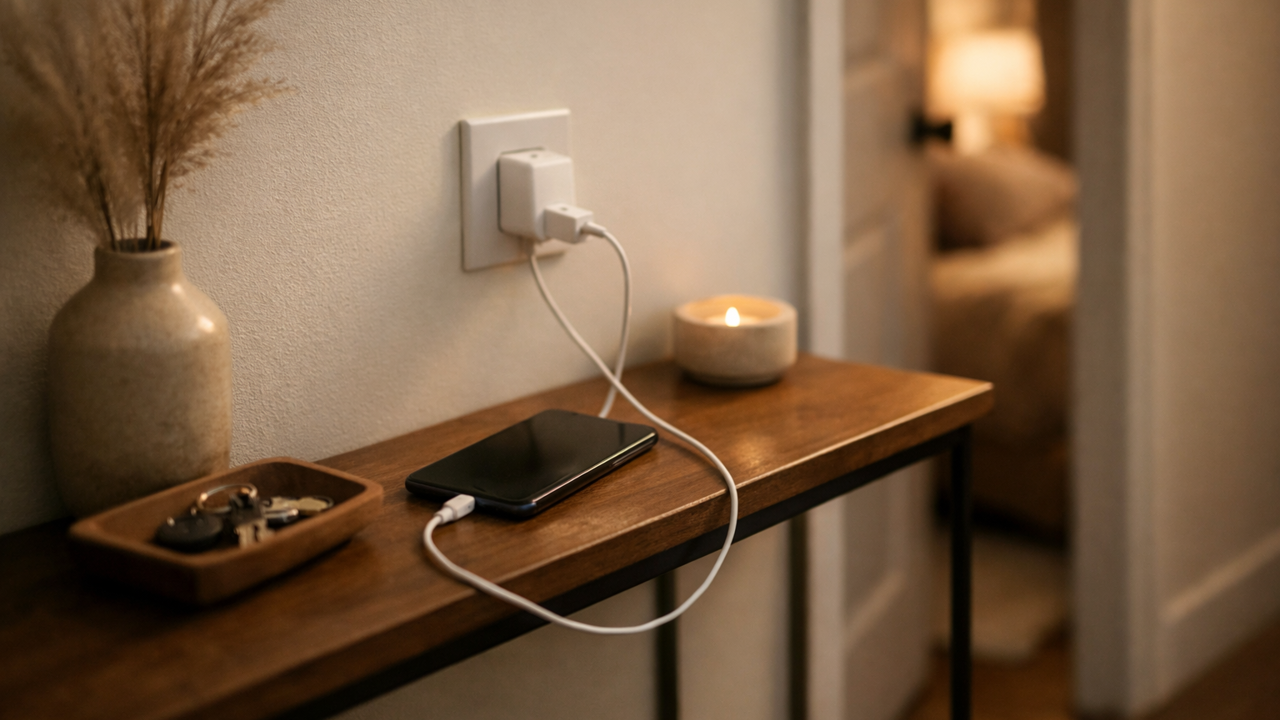
Removing the phone from the bedroom can be a practical digital boundary step for those who want to manage the start and end of the day more mindfully. When the bedroom is associated with rest, unwinding, and sleep routines, the presence of a screen can easily pull attention elsewhere. For this reason, the idea of a “charging station” makes the habit concrete by anchoring the phone to a fixed spot in another room.
The Purpose of a Charging Station: Defining a “Parking Spot”
The purpose of setting up a charging station is not just to move the phone away, but to define a “parking spot” for it during the day. Choosing an easy-to-reach point that’s still far from the bed—like a console in the hallway, a shelf in the living room, or a corner in the home office—makes things easier. That way, the phone can charge without being carried into the bedroom, and the need to have it within reach overnight may decrease.
Choosing the Right Location: Visibility and Friction
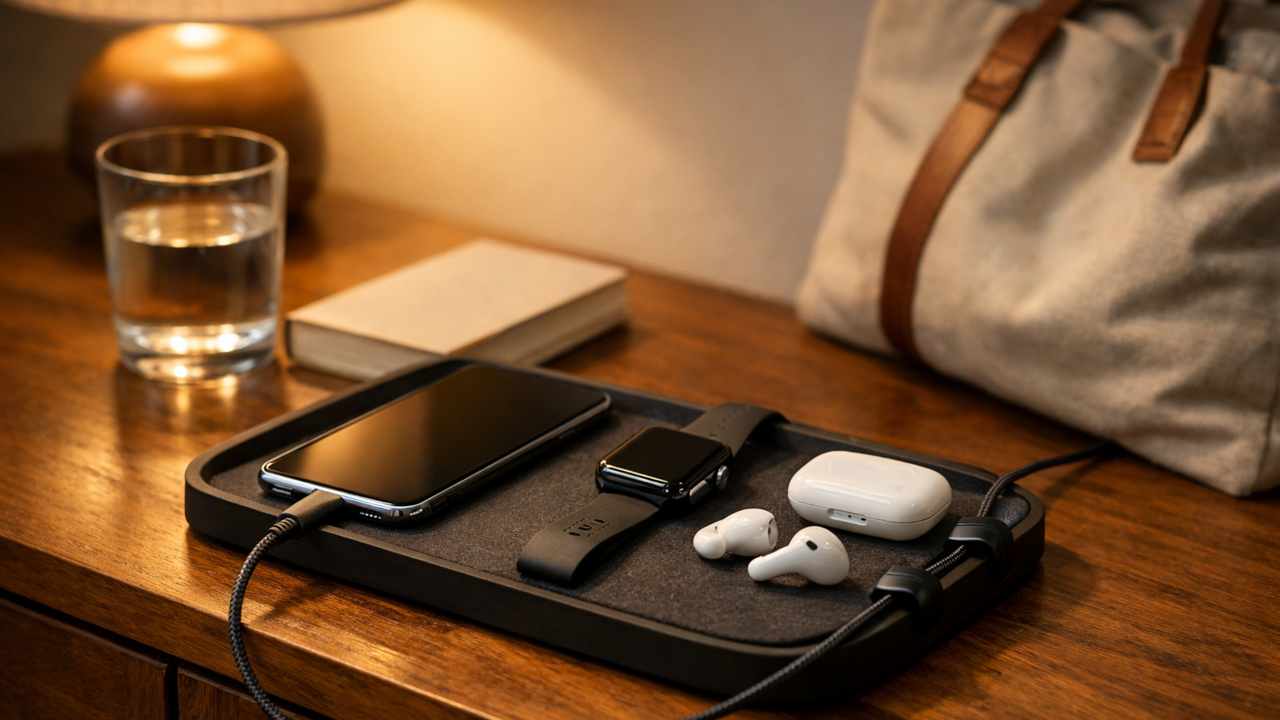
Two criteria help when choosing the right place: visibility and friction. Visibility reminds you to put the phone down; being far from the bedroom makes the act of going back to get it a little harder. If your home layout allows, placing the charging spot near “evening routine” items—like a glass of water, a book, or the bag you prepared for the next day—supports the habit.
Minimal Setup: A Simple, Tidy Station
Keep the charging station simple: a power outlet, a quality cable, and if possible a small box or tray may be enough. If you have other devices like headphones or a smartwatch, you can gather them in the same area to create a “digital parking area.” Small helpers like a cable organizer or clip also make the station more practical by reducing cable clutter.
Making the Boundary Sustainable with an Evening Shutdown Ritual
To make this boundary sustainable, add a small evening shutdown ritual. For example, a three-step routine—reducing notifications at a set time, writing the next day’s to-dos in a short note, and leaving the phone at the charging station—can make it easier for the mind to switch into “the day is over” mode. What matters here is not doing it perfectly, but building a routine you can repeat every day.
Setting Flexible Rules for Emergencies
For reasons like emergencies or family communication, having the phone completely out of reach may feel difficult. In that case, the solution is to clarify the conditions rather than cutting off access entirely: keep the ringer on but turn off social media notifications; define exceptions only for certain people; keep the phone not in the bedroom but at a spot near the door. This way, both accessibility and the idea of boundaries can work together.

Morning Routine: The First Minutes Without a Phone
A small plan can also help on the morning routine side: choose a screen-free start such as opening the curtains, drinking water, stretching for 2–3 minutes, or doing a short breathing exercise before picking up the phone. Taking the phone from the charging station only after this mini routine can help you spend the first minutes of the day more mindfully. If you want, using a separate alarm clock is also one of the options that makes this process easier.
Lasting Habit: Small Tweaks and Consistency
To make the habit stick, treat “failure” days as normal and improve the system with small tweaks. If there was a night when you brought the phone back to the bed, the next day change the station’s location, choose a longer cable, or add a small visual reminder like “the phone charges here.” Over time, the goal is not to restrict yourself, but to create a calmer routine in which you can set clearer boundaries with technology.